Volume Eating: How to Feel Full on a 1,500-Calorie Budget
Most calorie-restricted diets collapse for a straightforward reason: chronic hunger wears down even the most disciplined resolve. When individuals cut their energy intake to a standard weight-loss threshold like 1,500 calories, the immediate instinct is often to shrink meal portions down to miniature sizes. A palm-sized piece of chicken, two tablespoons of brown rice, and a few steamed florets leave the plate looking sparse and the stomach feeling emptier than before.
Hunger is not merely an issue of mental willpower. It is a biological signaling system governed by physical volume, digestive transit time, and hormonal feedback. This is where volume eating changes the equation. By strategically prioritizing foods with low caloric density and high water or fiber content, you can consume physically substantial meals, trigger satiety cues, and thrive on a 1,500-calorie budget without feeling deprived.
The Physiology of Fullness: Why Volume Trumps Calories
The stomach possesses specialized mechanoreceptors embedded within its muscular walls. These receptors respond directly to physical stretch, known medically as gastric distension. When you consume enough physical mass, the stomach wall expands, sending direct signals through the vagus nerve to the hypothalamus to suppress appetite.
Crucially, these mechanoreceptors detect physical mass and volume, not the concentration of calories. One tablespoon of olive oil contains roughly 120 calories, yet it occupies barely a trace of space in the stomach. In contrast, two pounds of raw spinach or three cups of chopped zucchini contain approximately the same number of calories while taking up enormous room inside the digestive tract.
By focusing on caloric density—the number of calories per gram of food—you work in tandem with your biology rather than against it. High-volume foods trigger the physical sensation of fullness long before you surpass your daily caloric ceiling.
Core Pillars of the High-Volume Grocery Cart
Building a successful 1,500-calorie framework requires stocking ingredients that deliver massive plate coverage with minimal caloric baggage.
Non-Starchy Vegetables
Non-starchy vegetables are the backbone of volume eating. They consist primarily of water and structured dietary fiber, allowing you to eat them in virtually unlimited quantities.
Cabbage, zucchini, cauliflower, cucumber, celery, bell peppers, and leafy greens should dominate your grocery cart. A whole head of roasted cauliflower contains only around 150 calories, yet it can serve as the visual and physical center of a main meal. Similarly, sliced cucumbers and shredded carrots can turn a modest lunch into a crunchy, time-consuming feast.
Ultra-Lean Proteins
Protein is universally recognized as the most satiating macronutrient, but dense fatty meats can rapidly consume a 1,500-calorie budget. To maximize volume, lean heavily into protein sources that provide pure protein with minimal incidental fat.
Egg whites, skinless chicken breast, 99 percent lean ground turkey, cod, shrimp, and nonfat plain Greek yogurt are the gold standards. For example, a single cup of liquid egg whites delivers 26 grams of muscle-preserving protein for roughly 130 calories. Whisked into a scramble packed with spinach, onions, and mushrooms, it yields an overflowing breakfast skillet that sustains energy for hours.
Water-Dense Carbohydrates and Fruits
Not all carbohydrates are equal in their volume potential. While refined pastas and breads pack heavy calories into compact portions, boiled whole potatoes score higher on the clinical satiety index than almost any other food. A medium boiled potato provides roughly 160 calories along with potassium and complex fiber that digests slowly.
When selecting fruits, prioritize berries, melons, and citrus. Strawberries and watermelon are composed of over 90 percent water. A full pound of fresh strawberries clocks in at under 150 calories, giving you an abundant sweet option that takes time to chew and swallow.
Strategic Culinary Techniques to Stretch Your Meals
Adopting a high-volume lifestyle does not mean chewing on raw stalks of celery all day. It requires clever preparation techniques that expand the physical footprint of foods you already enjoy.
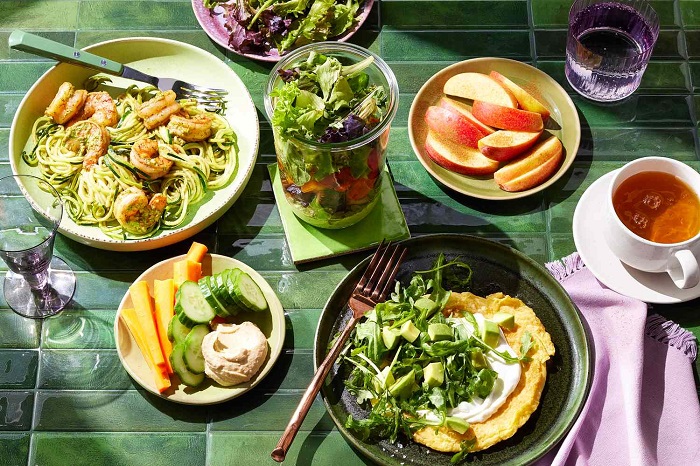
One of the most effective strategies is the 50/50 blend principle. Rather than eliminating calorie-dense staples like white rice, traditional pasta, or ground beef, simply dilute them with neutral, low-calorie produce. Mix equal parts cooked jasmine rice with riced cauliflower; combine regular spaghetti with spiralized zucchini noodles; or stretch lean ground beef with finely chopped cremini mushrooms. The flavor profiles remain largely unchanged, but the physical portion size doubles or triples.
Another essential technique is utilizing air and water to expand ingredient mass. Cooking rolled oats in three times the recommended amount of water over low heat, or letting them simmer slowly on the stovetop, creates an exceptionally voluminous porridge from a modest half-cup serving. Similarly, starting lunch or dinner with a clear, vegetable-heavy broth primes the digestive tract with warmth and liquid volume, significantly reducing the urge to overeat the main course.
Finally, do not underestimate the power of texture and eating speed. Crunchy foods like raw cabbage, radishes, and sugar snap peas force thorough mastication. Taking fifteen to twenty minutes to chew through a crunchy meal gives gut-derived satiety hormones like peptide YY and cholecystokinin adequate time to circulate and register in the brain.
A Realistic 1,500-Calorie High-Volume Blueprint
Putting these principles into practice creates a day of eating that looks abundant on the plate while adhering strictly to your target.
Start the morning with a massive garden scramble made from one whole egg and three-quarters cup of egg whites, folded over two cups of baby spinach, sliced mushrooms, and diced tomatoes, paired with a cup of fresh strawberries. This breakfast yields a substantial meal for approximately 320 calories.
For lunch, prepare a hearty grain-and-greens bowl using two cups of shredded romaine and cabbage as the base, tossed with four ounces of grilled chicken breast, a half-cup of warm quinoa, diced cucumbers, and pickled onions, dressed with apple cider vinegar and a single teaspoon of olive oil. The total energy cost stays comfortably around 380 calories.
An afternoon snack of one cup of nonfat Greek yogurt stirred with cinnamon and a generous serving of blueberries delivers 20 grams of protein and satisfying sweetness for about 180 calories.
Conclude the day with a dinner that anchors the evening: five ounces of baked white fish served alongside a medium baked potato and an entire sheet pan of roasted broccoli, zucchini, and bell peppers seasoned generously with garlic powder, paprika, and sea salt. This expansive dinner totals roughly 470 calories, leaving a 150-calorie buffer for a light evening snack like three cups of air-popped popcorn.
Avoiding Common Volume-Eating Pitfalls
While volume eating is an exceptionally practical tool, there are nuances to manage. The most frequent misstep is increasing insoluble fiber too rapidly. If your digestive system is unaccustomed to large quantities of raw cruciferous vegetables, an overnight shift can cause uncomfortable bloating, gas, and cramping. Introduce fibrous foods steadily over two to three weeks and ensure you drink abundant water to help the fiber pass smoothly through the tract.
Equally important is avoiding the complete elimination of dietary fats. While fat is calorically dense at nine calories per gram, healthy fats are vital for hormone production, joint health, and the absorption of fat-soluble vitamins A, D, E, and K. Keep a modest allocation of healthy fats—such as olive oil, avocado, or nuts—within your 1,500-calorie budget to ensure long-term physical wellbeing.
When you align your eating habits with your natural physiology, a lower-calorie budget stops feeling like an exercise in deprivation. By filling your plate with nutrient-dense, high-volume foods, you satisfy your hunger, maintain steady energy, and create a sustainable path toward your body composition goals.