
Why Meditation Retreats Offer a Unique Opportunity for Personal Transformation
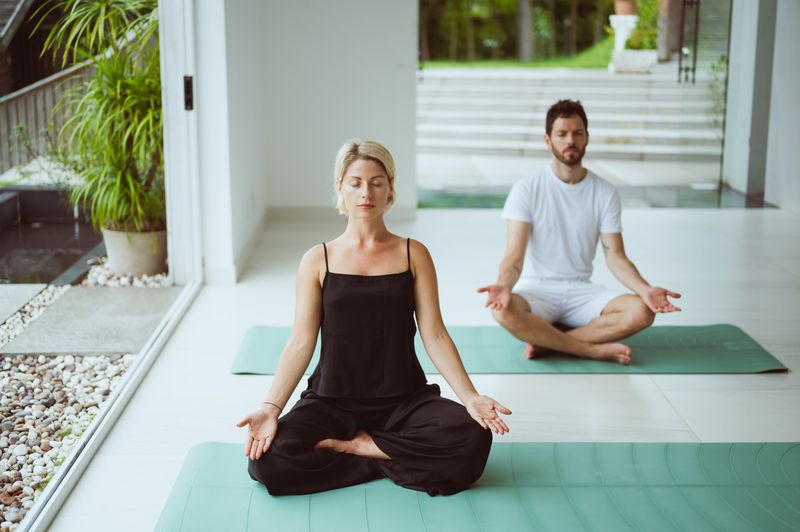
Most people who practice mindfulness treat it like dental hygiene: a ten-minute routine squeezed between a morning espresso and a crowded commute. Apps on our phones promise calm in three-minute intervals, offering micro-doses of peace designed to make an overstimulated life slightly more bearable. While these daily habits provide genuine value, they operate primarily as emotional maintenance. They keep the engine running, but they rarely rebuild the chassis.
A residential meditation retreat operates on an entirely different scale. It represents the difference between wiping down a surface and stripping it down to the raw grain. By pulling an individual completely out of their operating environment, a retreat disrupts the subtle, unconscious feedback loops that govern modern existence. True personal transformation rarely happens while maintaining the exact habits, environments, and relationships that created our current psychological baseline. Retreats offer a deliberate structural interruption, creating the rare conditions necessary for genuine psychological evolution.
The Power of Radical Environmental Interruption
The human nervous system is an adaptive mechanism, constantly recalibrating itself to the demands of its immediate environment. In everyday life, that environment is characterized by relentless incoming demands: push notifications, algorithmic feeds, professional deadlines, and social obligations. Even during leisure hours, our minds are quietly processing sensory fragments, evaluating micro-threats, and anticipating future scenarios.
When you enter a retreat setting, this entire apparatus is dismantled. Most structured retreats remove digital devices, eliminate conversational obligations through noble silence, and impose a rhythm dictated by simplicity rather than productivity.
This sensory fast initially feels disorienting. Deprived of the dopamine loops that usually distract us from our internal landscape, the mind initially rebels. It searches desperately for problems to solve, tasks to check off, or external stimulation to consume. Yet once the initial withdrawal subsides, an unfamiliar quiet takes its place. Sensory deprivation is not an empty absence; it is a clearing. When the deafening hum of the external world falls silent, the subtle frequencies of your own mind finally become audible.
Dissolving the Friction of Habitual Roles
Much of our daily mental exhaustion comes not from work itself, but from the continuous maintenance of an identity. Throughout an average day, you are constantly performing: you are a professional navigating office politics, a partner negotiating domestic responsibilities, a parent offering guidance, or a friend maintaining social standing. Each of these roles carries an invisible script, complete with expectations, defenses, and emotional postures.
A retreat strips away the stage entirely. In an environment where no one knows your job title, your net worth, your past achievements, or your personal grievances, the performance collapses under its own weight.
Quieting the Narrative Self
Without external mirrors reflecting your usual identity back to you, the psychological defense mechanisms you have spent decades refining begin to lose their utility. You no longer have an audience to impress, an adversary to outmaneuver, or a status to defend.
In this space, the internal monologue changes character. Instead of continuously rehearsing what you should have said in a meeting or drafting future arguments, the mental narrative begins to slow down. You begin to observe thought patterns as mechanical, impersonal phenomena rather than absolute truths. This shift in perspective—moving from identifying with every thought to simply witnessing the generation of thought—is the foundation of genuine psychological liberation.
Working Through the Threshold of Discomfort
Pop culture often romanticizes meditation retreats as idyllic spa vacations filled with incense, gentle chimes, and instant serenity. Anyone who has spent twelve hours sitting on a zafu cushion knows this perception is entirely fictional. Retreats are demanding psychological work.
Around the second or third day, most practitioners encounter what can best be described as a wall of resistance. The novelty wears off, physical aches in the knees and lower back intensify, and long-buried emotional material begins to surface. Without the usual escapes—entertainment, food, alcohol, social media, or small talk—you are forced to sit directly with whatever arises.
This encounter is precisely where transformation occurs:
-
Confronting unaddressed emotional residue: Unresolved grief, suppressed anxieties, and creative impulses that were drowned out by daily busyness demand your undivided attention.
-
Building tolerance for boredom: Modern culture has pathologized silence and stillness. Pushing through profound boredom rewires the brain’s baseline craving for cheap stimulation.
-
Cultivating visceral equanimity: When physical pain or mental agitation surfaces, the instinct is to fight it or flee. A retreat teaches you to relax around the discomfort, realizing that physical and emotional sensations are merely transient states rather than urgent emergencies.
Learning that an uncomfortable sensation or a terrifying thought will crest, peak, and dissolve on its own without your intervention is a radical realization. It breaks the automatic stimulus-response loop that drives impulsive reactions in everyday life.
The Silent Velocity of Collective Practice
There is a striking paradox at the heart of group retreats: you are entirely alone, yet you are carried by the collective. Sitting silently in a room with fifty other human beings who are all wrestling with their own minds creates a tangible, stabilizing atmosphere.
Practicing alone at home is fraught with internal negotiations. When a session gets difficult, it takes tremendous willpower not to open your eyes, stretch early, or check a message. In a communal meditation hall, the shared commitment creates an invisible container. You sit because everyone around you is sitting. You hold your posture because the room holds its posture. This collective stillness provides an energetic scaffolding that allows practitioners to delve deeper than they ever could in isolation.
Translating Stillness Back to the Modern World
The ultimate value of a retreat is not measured by how tranquil you feel on the cushion inside a serene monastery. The true test begins the moment you step back through your own front door.
A successful retreat does not insulate you from the complexities of modern existence; it alters your relationship to them. When you return to a crowded airport or an overflowing inbox after a week of silence, the sensory contrast is stark. You notice, with clinical clarity, exactly how everyday stimuli trigger bodily tension and mental turbulence.
Because you have spent days observing your reactions in high definition, you now possess a fraction of a second of space between a stimulus and your habitual reaction. That tiny gap is where transformation lives. In that brief window, you gain the agency to choose curiosity over defensiveness, patience over frustration, and deliberate presence over frantic reactivity. A meditation retreat does not change the world around you, but by fundamentally reorganizing the mind observing that world, it changes everything.